Mathematics
NC Programme of Study Aims
The national curriculum for mathematics aims to ensure that all pupils:
- become fluent in the fundamentals of mathematics, including through varied and frequent practice with increasingly complex problems over time, so that pupils develop conceptual understanding and the ability to recall and apply knowledge rapidly and accurately.
- reason mathematically by following a line of enquiry, conjecturing relationships and generalisations, and developing an argument, justification or proof using mathematical language
- can solve problems by applying their mathematics to a variety of routine and non-routine problems with increasing sophistication, including breaking down problems into a series of simpler steps and persevering in seeking solutions.
Mathematics is an interconnected subject in which pupils need to be able to move fluently between representations of mathematical ideas. The programmes of study are, by necessity, organised into apparently distinct domains, but pupils should make rich connections across mathematical ideas to develop fluency, mathematical reasoning and competence in solving increasingly sophisticated problems. They should also apply their mathematical knowledge to science and other subjects.
The expectation is that the majority of pupils will move through the programmes of study at broadly the same pace. However, decisions about when to progress should always be based on the security of pupils’ understanding and their readiness to progress to the next stage. Pupils who grasp concepts rapidly should be challenged through being offered rich and sophisticated problems before any acceleration through new content. Those who are not sufficiently fluent with earlier material should consolidate their understanding, including through additional practice, before moving on.
Curriculum
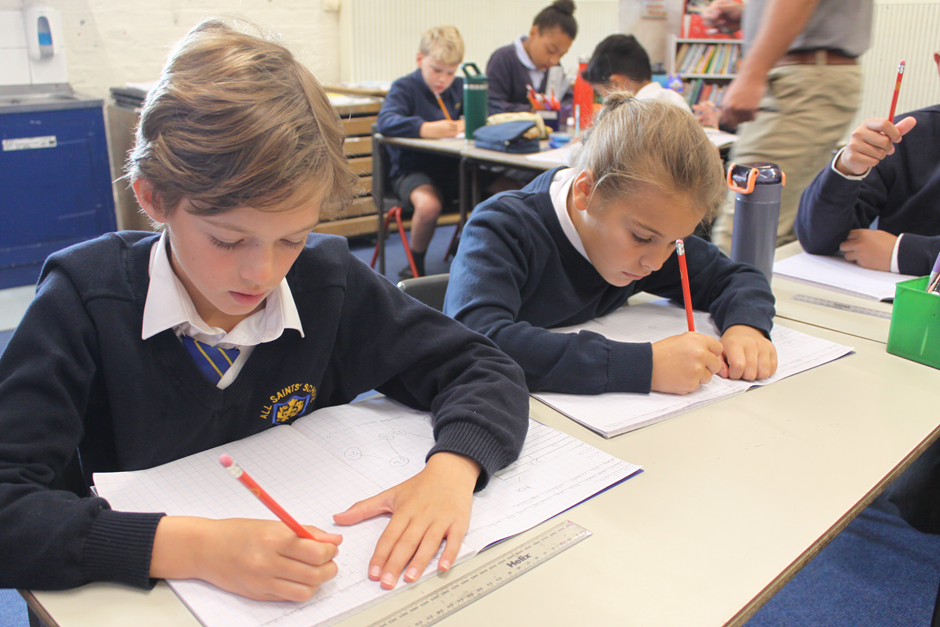
Mathematics at All Saints’
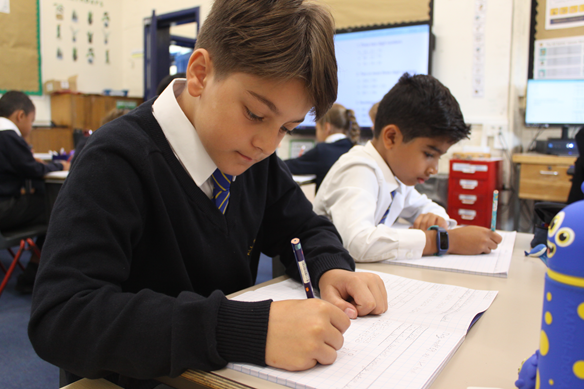
At All Saints’, we believe that every child can be successful in mathematics. Our aim is to develop confident, curious and resilient mathematicians who have a secure understanding of number, can reason mathematically and can apply their knowledge to solve problems in a range of contexts.
Our mathematics curriculum follows a mastery approach, with learning carefully sequenced so that children build secure knowledge and understanding over time. New concepts are introduced in small, connected steps, allowing pupils to develop both procedural fluency and deep conceptual understanding. Teachers regularly revisit prior learning and make explicit links between different areas of mathematics so that pupils understand how mathematical ideas connect rather than viewing each unit in isolation.
We use a spiral approach to learning, ensuring that important knowledge and skills are revisited, practised and developed as children progress through school. Opportunities for retrieval and regular practice help pupils secure key number facts and mathematical knowledge, while teachers identify and address misconceptions and gaps so that pupils are ready for future learning.
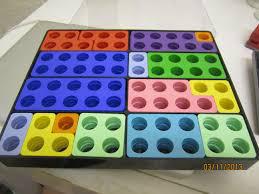
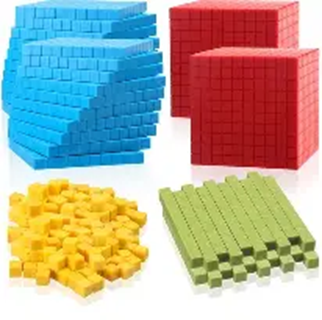
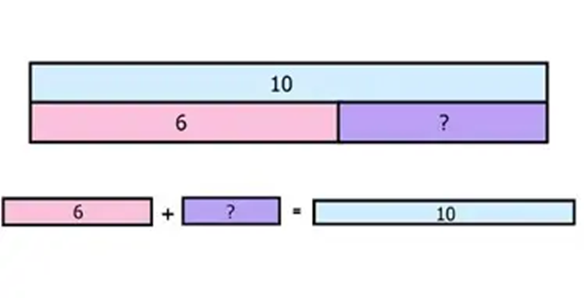
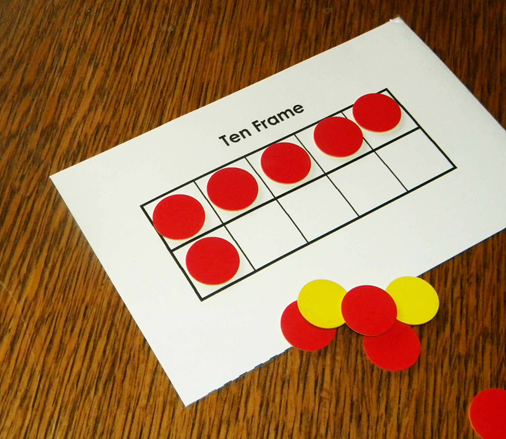
A key feature of our teaching is the Concrete–Pictorial–Abstract (CPA) approach. Children use carefully selected concrete resources and manipulatives, such as counters, cubes, place-value equipment and fraction resources, alongside visual representations including number lines, part-whole models and bar models. These representations help pupils to see the underlying mathematical structure before making connections to more abstract symbols and calculations. Resources remain available to pupils whenever they support understanding and are not limited to particular ages or attainment groups.
Our curriculum and lesson design draw upon high-quality materials and principles from the National Centre for Excellence in the Teaching of Mathematics (NCETM) and Oak National Academy. These support teachers in ensuring appropriate breadth and depth, coherent progression and carefully chosen representations, examples and questions.
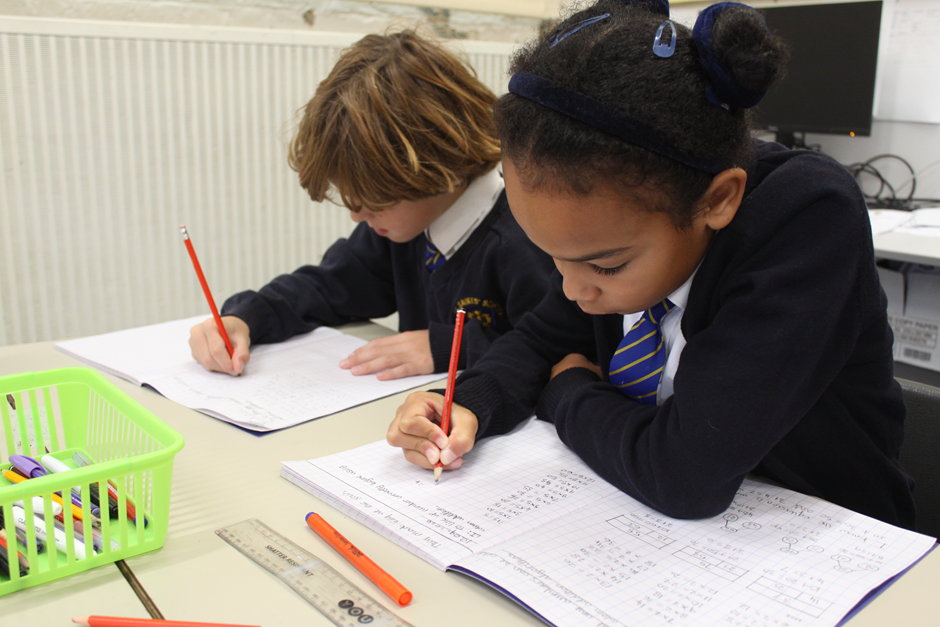
We place a strong emphasis on mathematical thinking, reasoning and problem-solving. Pupils are encouraged to explain their thinking, justify their answers, spot patterns, make connections and select efficient strategies. Precise mathematical vocabulary and purposeful classroom discussion help children articulate and deepen their understanding.
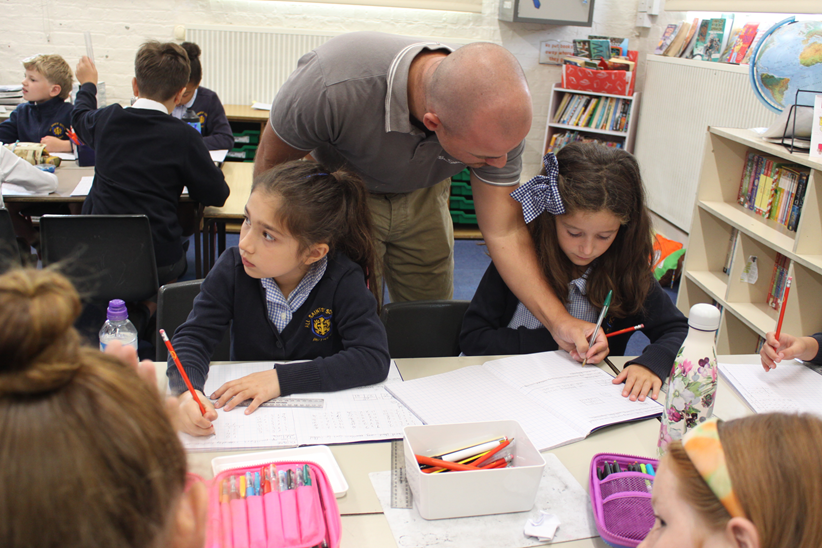
Assessment is an integral part of our mathematics teaching. Teachers use questioning, observation, discussion and pupils’ work to check understanding throughout lessons and adapt teaching accordingly. Children who need additional support receive timely scaffolding, intervention and opportunities to revisit learning, while pupils who grasp concepts quickly are challenged to deepen their understanding through reasoning, application and increasingly complex problems.
Through our ambitious and inclusive mathematics curriculum, we aim for all pupils to develop the fluency, knowledge, reasoning skills and confidence they need to become successful mathematicians and to be well-prepared for the next stage of their education.
How we teach Mathematics
Across All Saints’, our mathematics teaching is built around the following principles:
- Mastery for all – we believe all pupils can achieve in mathematics and provide appropriate support and challenge to enable every child to succeed.
- Concrete–Pictorial–Abstract (CPA) – pupils move between practical resources, visual representations and abstract mathematical notation to develop secure conceptual understanding.
- Fluency and number sense – regular practice and retrieval help pupils develop automaticity, confidence and efficient calculation strategies.
- Reasoning and problem-solving – pupils are expected to explain, justify, investigate and apply their mathematical understanding in different contexts.
- Carefully sequenced learning – concepts are broken into manageable steps, with new learning building purposefully upon what pupils already know.
- A spiral curriculum – important knowledge and skills are revisited and developed over time, enabling pupils to make connections within and across mathematical areas.
- Mathematical vocabulary – precise vocabulary and stem sentences support pupils in articulating and developing their mathematical thinking.
- Representation and structure – carefully chosen manipulatives, models and images help pupils recognise the underlying structures within mathematics.
- Depth before acceleration – pupils who are secure in a concept are challenged through deeper reasoning, connections and increasingly complex applications rather than simply moving ahead to new content.
- Responsive teaching – ongoing assessment enables teachers to identify misconceptions and gaps, adapt teaching and provide timely support.
|
|
|